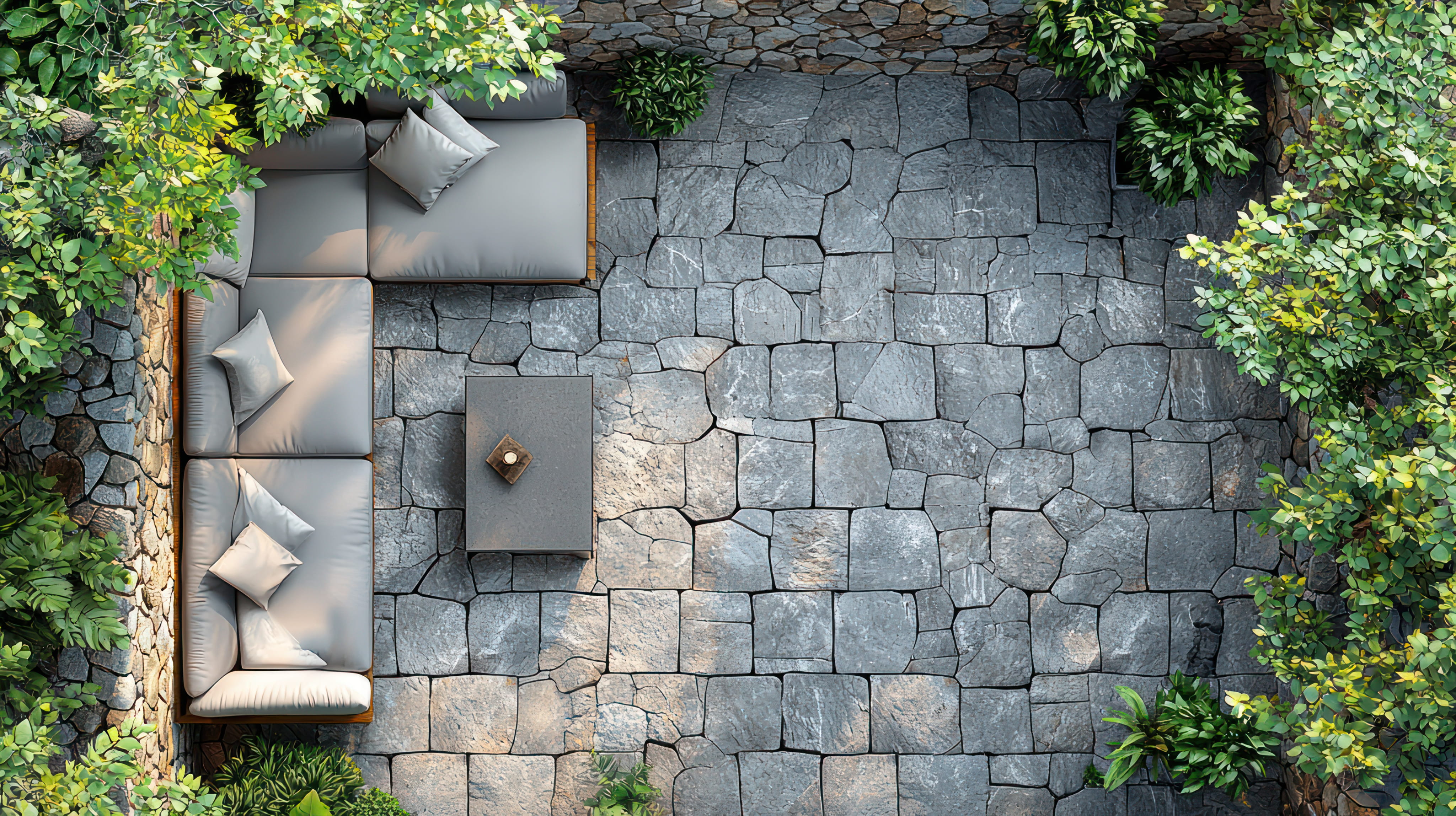
One of the first questions homeowners ask when planning a new patio is which material to use. Pavers and natural stone are both popular choices — both look great in photos, both hold up well outdoors, and both add real value to your property. But they are not the same, and the right choice depends on your yard, your lifestyle, and what you want the space to do for you.
Here is a straightforward breakdown so you can walk into your project with confidence.
Pavers are manufactured units — typically made from concrete, clay brick, or porcelain — that come in consistent sizes, shapes, and colors. They are installed in patterns across a compacted base and held together with jointing sand between each piece.
Because they are manufactured, pavers offer a wide range of design options. You can choose from dozens of colors, finishes, and laying patterns to create a look that ranges from clean and modern to rustic and traditional. And because each piece is identical in size, installation is precise and efficient.
Pavers are also one of the most practical patio materials for the DFW climate. The joints between individual pieces allow for natural movement as the ground expands and contracts with temperature and moisture changes — something North Texas clay soils do constantly. If a paver cracks or gets stained, that single piece can be replaced without disturbing the rest of the surface.
Pavers work best for: Large entertaining patios, driveways, pool surrounds, high-traffic walkways, and homeowners who want design flexibility at a more accessible price point.
Natural stone — flagstone, limestone, travertine, sandstone, slate — is exactly what it sounds like. Each piece is quarried directly from the earth, which means no two pieces are identical. The variation in color, texture, and shape is what gives natural stone patios their character and organic beauty.
That natural variation is the defining advantage of stone. A flagstone patio does not look like it was installed — it looks like it grew there. It has a warmth and authenticity that manufactured materials can mimic but never quite replicate. And natural stone ages beautifully, with decades of weathering tending to deepen its character rather than diminish it.
From a durability standpoint, natural stone is extremely strong. It resists UV fading, handles temperature extremes well when properly selected for the climate, and can last for generations with basic maintenance. The tradeoff is that natural stone typically carries a higher upfront cost, and repairs are more complex since matching individual pieces can be challenging.
Natural stone works best for: Garden pathways, accent features, naturalistic pool surrounds, upscale patios where organic beauty is the priority, and homeowners looking for a premium, timeless aesthetic.
Cost: Pavers are generally more budget-friendly upfront. Natural stone commands a premium — but delivers a perceived value and long-term aesthetic that many homeowners find worth the investment.
Maintenance: Pavers require minimal upkeep — occasional joint sand replenishment and periodic sealing. Natural stone may need more frequent sealing depending on the stone type, and individual piece replacement is harder to match seamlessly.
Design Options: Pavers win on variety — colors, shapes, patterns, and finishes are virtually limitless. Natural stone wins on authenticity — no manufactured product truly replicates the look of real stone.
Durability in DFW: Both perform well in North Texas when properly installed. Pavers handle soil movement well due to their jointed system. Natural stone holds up to heat and UV exposure exceptionally, but material selection matters — some stones perform better in DFW conditions than others.
Repairability: Pavers are easier to repair — pop out the damaged piece and replace it. Natural stone repairs require finding a matching piece, which can be difficult depending on the material.
Some of the best outdoor patio designs in DFW use both. A paver field for the main entertaining surface, bordered by a natural stone seating wall or accent edge. A flagstone stepping path leading into a paver patio. Combining both materials gives you the practicality and affordability of pavers where it matters most, and the premium character of natural stone where it makes the biggest visual impact.
Planning a project? Explore our services: Landscape Design, Masonry & Hardscapes, Outdoor Patios & Pavers and Outdoor Living Spaces, or request your free estimate.

That is exactly what Salas Outdoors is here for. Our team works with DFW homeowners to evaluate their yard, their budget, and their vision — and recommend the right material combination for their specific project.
Get your free estimate today and let us help you build an outdoor patio that looks great, holds up to the Texas climate, and adds lasting value to your home.


