
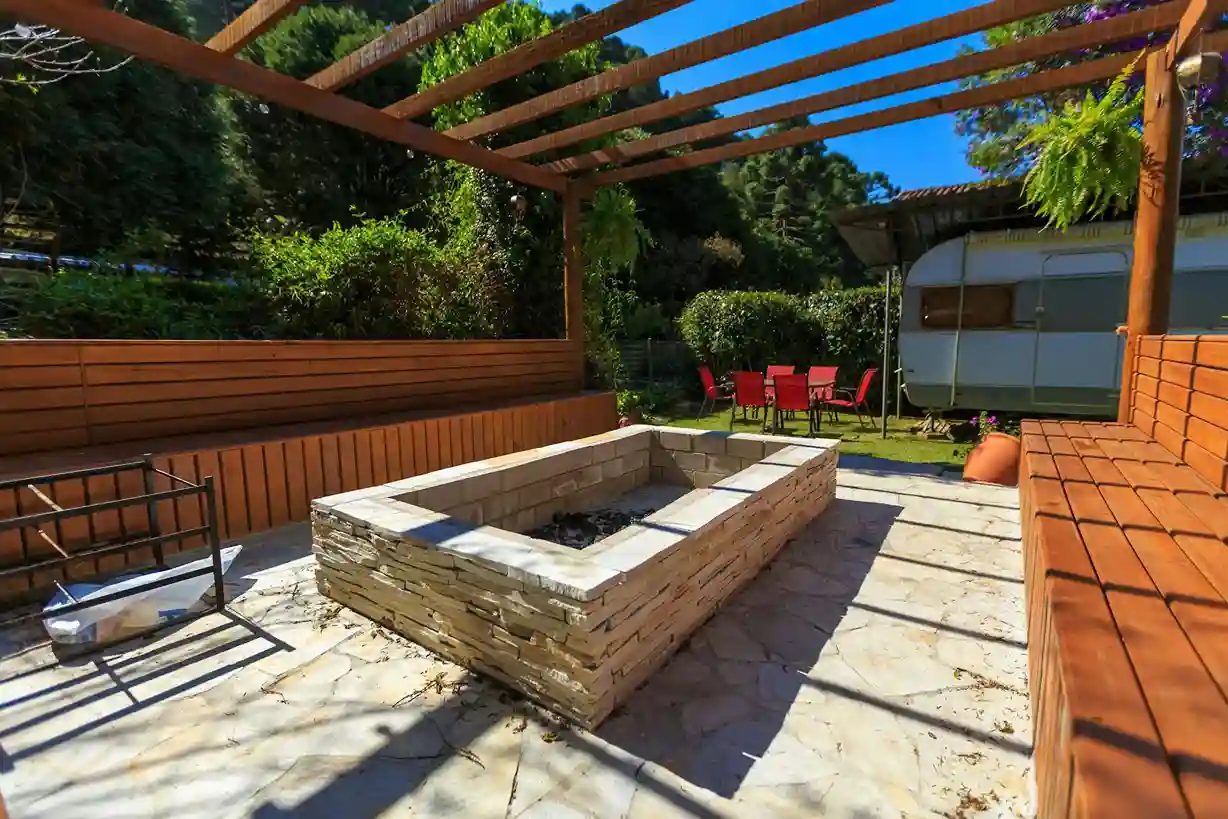
If there's one outdoor structure that transforms a Dallas–Fort Worth backyard more dramatically and affordably than anything else, it's a pergola. A well-designed pergola creates a defined outdoor room, provides shade from the relentless North Texas sun, frames your patio or fire pit area beautifully, and adds genuine architectural character to your backyard — all without the cost or complexity of a full covered room addition.
But not every pergola performs equally in the DFW climate. North Texas summers routinely exceed 100 degrees, spring storms bring heavy wind and rain, and the intense UV exposure year-round demands structures and materials that are genuinely built for outdoor performance. Choosing the wrong pergola type or material for your Dallas backyard is a mistake that becomes very apparent — and very expensive — within just a few years.
This guide covers everything Dallas–Fort Worth homeowners need to know about pergolas — the different types available, which materials perform best in the Texas climate, what a pergola costs in the DFW area, how permits work, and how to design a pergola that actually gets used year-round.
A pergola is an open-air outdoor structure consisting of vertical posts supporting horizontal beams and an overhead lattice or slatted roof. Unlike a covered patio or solid roof patio cover, a traditional pergola provides filtered shade — allowing some sunlight through the overhead structure while blocking direct sun and defining the space beneath it.
In the Dallas–Fort Worth area, pergolas have become one of the most popular outdoor living additions for several reasons:
They create a defined outdoor room without the visual weight or cost of a fully enclosed structure. A pergola frames your patio, outdoor kitchen, or fire pit area with architectural presence, making the space feel intentional and designed rather than open and undefined.
They provide essential shade in a market where direct sun makes outdoor spaces largely unusable for much of the day from May through September. Even a basic open-slat pergola reduces direct UV exposure and ground-level radiant heat significantly compared to an unshaded patio.
They support outdoor living features. Ceiling fans, landscape lighting, string lights, outdoor speakers, misting systems, and retractable shades can all be integrated into a pergola structure — transforming it from a simple shade element into a fully equipped outdoor living hub.
They add home value. In the competitive DFW real estate market, a quality pergola over a patio or outdoor kitchen adds visual appeal and perceived living space that buyers respond to during home tours and at resale.
One of the most important decisions you'll make when planning a pergola in the DFW area is choosing the right type for your specific needs. Not all pergolas are created equal — and the type you choose has a direct impact on how much shade you actually get, how much weather protection you enjoy, and how usable your outdoor space is through the brutal North Texas summer.
The traditional pergola design features open, evenly spaced rafters or slats that filter sunlight without fully blocking it. An open slat pergola is the most affordable pergola option and provides excellent architectural definition and ambiance. It's ideal for homeowners who want the look and feel of a pergola, want to support string lights and climbing plants, and are comfortable supplementing shade with outdoor umbrellas, shade sails, or retractable canopies.
The honest limitation of an open slat pergola in the DFW market is that open slats alone provide insufficient shade during the peak summer months when the sun angle is high and UV intensity is at its maximum. An open pergola in July or August in Dallas is more comfortable than a fully exposed patio, but it won't make a west or south-facing patio truly usable during afternoon hours without supplemental shading.
Open slat pergolas are best suited for shaded or east-facing locations, for homeowners who entertain primarily in the morning or evening, or as a secondary structure in the yard — a garden focal point, a path feature, or a poolside element — rather than the primary outdoor living room.
The louvered pergola is the fastest-growing pergola type in the DFW market — and for very good reason. A louvered pergola features an overhead roof system of adjustable slats (louvers) that can be opened or closed manually or via a motorized system to control sunlight, shade, and weather protection on demand.
For North Texas homeowners, the louvered pergola is the single most versatile pergola solution available because it directly addresses DFW's most challenging climate variables:
Open louvers in the morning allow fresh air and gentle morning light into the space. Angled louvers in the afternoon block the brutal western sun that makes most DFW patios unusable from 2 to 7 PM. Closed louvers during rain events provide weather protection that extends your outdoor season well beyond what an open pergola can offer.
Motorized louvered pergolas — where the louver position is controlled via a wall switch, remote, or smartphone app — are increasingly the choice of DFW homeowners who want maximum comfort with minimum effort. Premium motorized systems integrate ceiling fans, LED lighting, outdoor speakers, and smart sensors that automatically close the louvers when rain is detected.
The louvered pergola is the most recommended choice for primary outdoor living areas in the DFW metroplex precisely because it turns a seasonally limited space into a genuinely year-round outdoor room.
While not technically a pergola in the traditional sense, a solid-roof covered patio is worth including in this comparison because many DFW homeowners are choosing between these options when planning outdoor shade structures. A solid-roof covered patio provides complete, unconditional overhead protection from sun, rain, and UV — making it the most weather-independent outdoor space available short of an enclosed room.
Solid patio covers are attached to the home and extend the roofline over the patio area. They're typically built with metal roofing panels, polycarbonate panels, or as a full structural extension that matches the home's existing roofline. They provide the highest level of appraised value contribution — often treated more like a room addition than a garden structure — and deliver the most reliable year-round outdoor room performance of any shade structure.
The trade-off is cost and visual weight. A solid patio cover is the most expensive of the three options, requires the most extensive permitting in most DFW municipalities, and creates a more enclosed, room-like feel that some homeowners prefer and others find too closed in.
Material selection is where pergolas either succeed or fail in North Texas. The combination of extreme summer heat, intense UV exposure, occasional hard freezes, and spring storm events demands materials that are genuinely built for outdoor performance — not just aesthetically pleasing on paper.
Cedar is the most popular wood choice for pergolas in the DFW area, and for good reason. Cedar naturally resists rot, insects, and moisture — making it significantly more durable in outdoor applications than pressure-treated pine. It has a warm, natural aesthetic that complements a wide range of home styles throughout the DFW metroplex, and it can be stained or painted to match or complement your home's exterior.
The honest maintenance requirement of a cedar pergola is regular staining or sealing — typically every one to two years in the DFW climate — to maintain the wood's appearance and prevent weathering. A well-maintained cedar pergola can last 20 years or more in North Texas. A neglected cedar pergola will show weathering and graying relatively quickly under the intense Texas sun.
Cedar pergolas deliver a classic, timeless look that many DFW homeowners prefer over aluminum alternatives, particularly in homes with traditional or transitional architectural styles. For homeowners who are committed to periodic maintenance and love the warm, natural character of wood, cedar remains an excellent choice.
Aluminum has become the leading material choice for new pergola installations in the DFW market — particularly for louvered systems — and the reasons are straightforward. Aluminum is inherently rust-resistant, does not warp or crack under temperature extremes, requires virtually no maintenance beyond occasional cleaning, and holds up to the North Texas climate with remarkable consistency year after year.
Modern powder-coated aluminum pergolas are available in dozens of colors and finishes — from clean white to deep bronze to custom tones matched to your home's exterior — and the clean, contemporary aesthetic of aluminum frames suits both modern and traditional DFW home styles exceptionally well.
For motorized louvered systems specifically, aluminum is the standard material because it provides the structural consistency and dimensional stability that precision louver mechanisms require. Wood louvered systems exist, but they are far less common because wood's natural tendency to expand and contract with moisture and temperature changes creates mechanical challenges for motorized systems over time.
If you're considering a louvered pergola for your Dallas backyard, aluminum is almost certainly the right material choice.
Vinyl is the most low-maintenance pergola material available — it never needs painting, staining, or sealing, resists insects and moisture completely, and holds its color and appearance well under UV exposure. Vinyl pergolas represent a middle ground between wood's natural warmth and aluminum's structural performance.
The limitation of vinyl in the DFW context is that it can become brittle under sustained extreme heat over time, and it lacks the structural strength of aluminum for larger spans or integrated systems. Vinyl pergolas are best suited for smaller, simpler applications rather than large primary outdoor living structures.
In the City of Dallas and most DFW municipalities, pergola permits are required when the structure meets certain size or attachment thresholds. Requirements vary by city — what triggers a permit in Frisco may differ from Dallas, Plano, McKinney, or Allen — but as a general rule:
Attached pergolas that connect directly to the home's structure typically require a building permit in most DFW cities, as they affect the structural integrity of the home.
Freestanding pergolas above a certain size threshold (commonly 200 square feet or structures over a certain height) typically require permits as well.
Motorized louvered pergola systems with integrated electrical are almost universally permit-required across the DFW market, as they involve both structural and electrical components.
HOA approval is required in the majority of communities throughout Frisco, Plano, McKinney, Allen, and other North Dallas suburbs before any pergola installation begins.
A professional outdoor living contractor familiar with the DFW market will manage all permit applications and HOA submissions on your behalf — ensuring your pergola is fully compliant before construction begins. Never skip the permit process for a pergola — unpermitted structures create complications at sale and may be required to be removed or modified at your own expense.
Pergola costs in the Dallas–Fort Worth area vary based on type, size, material, and any integrated features. Here's a practical framework for budgeting:
Basic open slat cedar or pressure-treated wood pergolas for smaller footprints (10x10 to 12x12) typically start around $3,500 to $7,000 installed in the DFW area.
Mid-size custom cedar or aluminum open pergolas (14x14 to 20x16) with clean design and basic integration range from $7,000 to $15,000 depending on complexity and features.
Motorized aluminum louvered pergola systems — the most popular premium option in the DFW market — typically start around $15,000 for smaller configurations and range from $20,000 to $40,000 or more for larger, fully integrated systems with fans, lighting, smart controls, and heating elements.
Solid roof covered patios represent the highest investment level, typically starting around $20,000 and ranging up to $60,000 or more for larger structures attached to the home with premium finishes.
The most important thing to understand about pergola pricing in Dallas is that a quality installation is a permanent fixture that adds real appraised value to your property. A properly built, well-designed pergola over your primary outdoor living area returns meaningful value at resale while delivering years of daily enjoyment in the meantime.
Before you commit to a pergola design, keep these North Texas-specific considerations in mind:
Orientation matters more in DFW than most markets. The direction your pergola faces determines how much afternoon sun exposure you deal with. West-facing patios receive the harshest afternoon sun in Dallas — from roughly 2 to 7 PM. If your primary outdoor space faces west, a louvered or solid roof solution is far more practical than an open slat design that won't provide adequate relief during peak heat hours.
Size up. The most common regret DFW homeowners express after completing a pergola installation is that they didn't go bigger. A pergola that comfortably fits your furniture and allows for natural movement within the space always looks and functions better than one that feels cramped. When in doubt, increase the footprint.
Plan for integrated features from the start. Ceiling fans, lighting, outdoor speakers, misting systems, and smart controls are all significantly easier and less expensive to integrate during initial construction than to add retroactively. Plan for the features you want — and the ones you might want in the future — during the design phase.
Match your home's architectural style. The most beautiful pergolas in the DFW area feel like natural extensions of the home rather than structures dropped into the yard. Work with a designer who understands how to match pergola proportions, post sizing, beam profiles, and material choices to your specific home's architecture.
Account for HOA requirements early. Many communities throughout Frisco, Plano, McKinney, and Allen have specific guidelines on pergola materials, colors, attachment methods, and roof styles. Knowing these requirements before you design your pergola saves time, money, and frustration.
At Salas Outdoors, we've been designing and building custom pergolas and outdoor living structures for Dallas–Fort Worth homeowners since 2010. Whether you're looking for a classic cedar pergola over your backyard patio, a motorized aluminum louvered system that makes your outdoor space usable year-round, or a complete outdoor living transformation that combines a pergola with a custom patio, outdoor kitchen, and landscape lighting, our team delivers the craftsmanship and local expertise that every DFW pergola project deserves.
We handle everything from design and HOA submissions to permit management, construction, and integrated electrical work — so your pergola project is seamless from the first conversation to the day you sit down and enjoy your finished outdoor space.

Ready to add the shade, style, and functionality your Dallas–Fort Worth backyard is missing? Request your free pergola estimate from Salas Outdoors today and let's design the perfect outdoor structure for your home and lifestyle.


