Got everything I need. Here's blog #7:
Blog Title:
Title Tag:Retaining Walls Dallas TX | Salas Outdoors(44 characters)
Meta Description:Dealing with a sloped yard, erosion, or drainage issues in Dallas? Learn everything about retaining walls in DFW — types, costs, and tips from Salas Outdoors.(159 characters)
Body:
If your Dallas–Fort Worth yard has a slope, drainage problems, pooling water after rain, or soil that keeps eroding away from your flower beds and fence line, a retaining wall may be the single most impactful improvement you can make to your property. Retaining walls solve real structural problems, create usable outdoor space where there wasn't any before, and when built with quality materials and proper drainage, they add lasting beauty and value to your DFW home.
This guide covers everything North Texas homeowners need to know about retaining walls — what they do, what types work best in the DFW area, what they cost, how drainage works, and how to make sure yours is built to last through everything the Texas climate throws at it.
A retaining wall is a structure designed to hold back soil, manage water movement, prevent erosion, and create level usable space on properties with grade changes. In the Dallas–Fort Worth area, retaining walls serve a particularly critical role because of two major factors unique to North Texas: expansive clay soil and unpredictable weather patterns.
DFW sits on some of the most challenging soil in the country. North Texas clay soil expands significantly when wet and shrinks when dry — a cycle that repeats constantly through our heavy spring rains, scorching dry summers, and occasional hard freezes. This constant soil movement creates pressure against foundations, causes erosion on slopes, and over time can undermine structures, walkways, and landscaping throughout your yard.
Add in the fact that Dallas–Fort Worth experiences intense rain events that can drop several inches in just a few hours, and the need for proper slope management and drainage becomes even more urgent. A professionally designed and installed retaining wall addresses all of these challenges at once — holding the soil in place, directing water away from your home, and turning a sloped or eroded yard into usable, beautiful outdoor space.
Not every yard needs a retaining wall, but there are clear signs that one would benefit your property significantly. Here's what to watch for as a Dallas–Fort Worth homeowner:
Visible soil erosion — If you notice bare soil washing downhill after rain events, exposed tree roots, or mulch constantly migrating out of your planting beds, erosion is actively degrading your landscape. A retaining wall stops this process permanently.
Pooling water near your foundation — Water that collects against your home's foundation is a serious long-term threat. In DFW's clay-heavy soil, this water increases soil pressure against your slab and contributes to foundation movement over time. A properly graded retaining wall combined with drainage solutions redirects this water away from your home.
A steep or difficult-to-use slope — If part of your backyard is so sloped that you can't mow it safely, can't plant it effectively, or simply can't use it at all, a retaining wall creates flat, level, functional space where there was none. This is one of the most dramatic backyard transformations available to North Texas homeowners.
Cracking, leaning, or failing existing walls — If you have an existing retaining wall that's showing signs of movement, cracking, or leaning forward, it's a sign that drainage behind the wall has failed or the original construction was inadequate. A leaning retaining wall is not a cosmetic problem — it's a structural one that needs to be addressed before it fails completely.
Driveway or walkway edge erosion — Soil washing away from the edges of your driveway or walkways creates unsightly gaps, undermines the base, and eventually causes cracking and settling. A low retaining or border wall along these edges solves the problem cleanly and permanently.
Retaining walls come in a variety of materials and construction methods. Here's a breakdown of the most common types used in the DFW area and what each is best suited for:
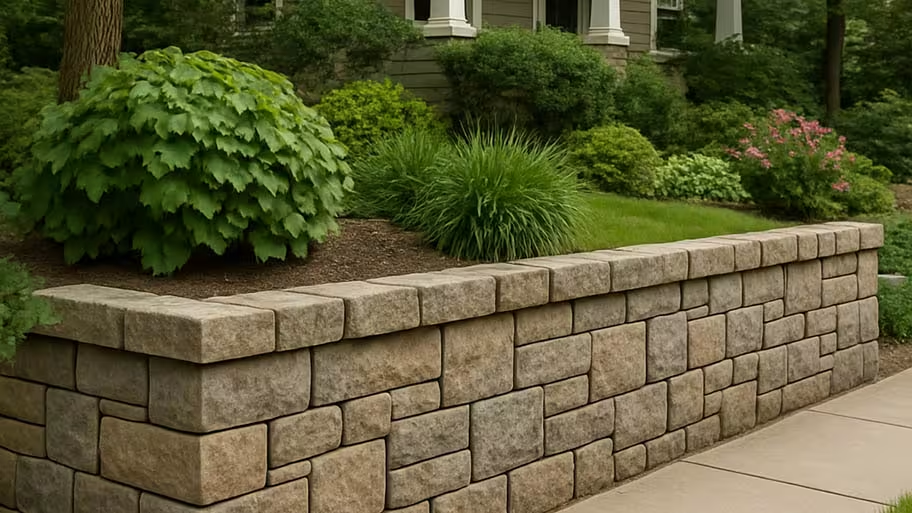
Natural stone — including limestone, flagstone, and fieldstone — delivers the most beautiful and timeless retaining wall aesthetic available. For DFW homeowners who want a wall that looks like it belongs in the landscape rather than sitting on top of it, natural stone is the premium choice. Limestone is particularly popular in North Texas because it's locally available, extremely durable, and complements the warm tones common in DFW home architecture.
Natural stone walls are typically built dry-stacked or with mortar, depending on height and structural requirements. They require skilled masonry work to execute properly, but the finished result is a wall that genuinely elevates the entire outdoor environment.
Concrete segmental retaining wall blocks — brands like Allan Block, Versa-Lok, and similar systems — are the most widely used retaining wall material in the DFW residential market. These interlocking block systems are engineered specifically for retaining wall applications, are available in dozens of colors and textures, and can be installed relatively quickly compared to natural stone.
Segmental block walls work well for walls ranging from a few courses high up to several feet, and they perform exceptionally well in the DFW climate when proper drainage is incorporated into the design. Many homeowners choose concrete block for its combination of affordability, durability, and the ability to mimic the look of natural stone or brick.
Brick retaining walls offer a classic, traditional aesthetic that complements many of the architectural styles common throughout the DFW metroplex. Brick is an excellent choice when you want your retaining wall to feel like a natural extension of your home's exterior — particularly for homes with existing brick facades, walkways, or other masonry features.
Brick retaining walls require mortar and a proper concrete footing, and walls above a certain height require rebar reinforcement to meet DFW building codes. When built correctly, a brick retaining wall is an extremely durable, low-maintenance structure that looks exceptional for decades.
Poured concrete is the most structurally strong retaining wall option, making it the preferred choice for taller walls, walls supporting heavy surcharges like driveways or structures above them, and commercial applications. In residential DFW settings, poured concrete walls are most common for taller retaining applications where structural engineering is required.
Concrete walls can be finished with stone veneer, stucco, or other decorative treatments to improve their visual appeal, making them a functional and attractive choice for larger retaining projects.
Timber retaining walls are typically the most budget-friendly option and can be appropriate for shorter, decorative garden walls and planting bed borders. However, in the DFW climate, timber retaining walls have a significantly shorter lifespan than stone, brick, or concrete alternatives. North Texas heat, moisture cycles, and soil movement accelerate wood degradation, meaning timber walls often need replacement within ten to fifteen years. For any wall with structural significance, a more durable material is the better long-term investment.
Here's the one thing every Dallas–Fort Worth homeowner needs to understand about retaining walls before any other consideration: the majority of retaining wall failures are not caused by the wall material or the installation technique — they're caused by inadequate drainage behind the wall.
When water accumulates in the soil behind a retaining wall, it creates hydrostatic pressure — the force of water pushing outward against the wall. In DFW's clay-heavy soil, which holds water longer than most soil types, this pressure can be enormous. Over time, unrelieved hydrostatic pressure causes walls to lean, crack, and eventually fail — regardless of how well they were otherwise built.
A properly designed retaining wall in the Dallas–Fort Worth area must incorporate drainage solutions built into the construction:
Gravel backfill — A layer of clean gravel directly behind the wall allows water to move freely downward rather than building up pressure against the wall face.
Drainage pipe — A perforated drainage pipe at the base of the wall collects water moving through the gravel backfill and carries it away from the wall to a safe discharge point.
Weep holes — In mortared walls like brick and poured concrete, weep holes are openings built into the wall at regular intervals at the base to allow water to escape rather than build up.
Surface grading — The ground surface above and behind the wall should be graded to direct surface runoff away from the wall rather than toward it.
Any retaining wall contractor in the DFW area who doesn't discuss drainage as a primary part of the project should raise immediate concern. Drainage is not optional — it's the difference between a wall that lasts 30 years and one that fails in five.
In the City of Dallas and most DFW municipalities, retaining walls above four feet in height require a building permit and in many cases a structural engineer's stamp. The specific requirements vary by city — Dallas, Fort Worth, Frisco, Plano, McKinney, and Allen all have their own permitting thresholds and requirements.
A professional retaining wall contractor familiar with the DFW market will manage the permit process for you, including any engineering documentation required for taller walls. Never skip the permit process for a retaining wall — unpermitted walls can create legal complications when you sell your home and may need to be removed or rebuilt at your own expense if discovered.
Retaining wall costs in the Dallas–Fort Worth area vary based on wall height, length, material selection, site conditions, and drainage requirements. Here's a general framework for budgeting:
Basic segmental block or simple stone walls for garden borders and low-grade changes typically start around $20 to $30 per square foot installed in the DFW area.
Mid-range natural stone, brick, or premium block walls with integrated drainage systems run approximately $30 to $55 per square foot depending on material selection and site complexity.
Taller walls requiring engineering, rebar reinforcement, or extensive drainage solutions can range from $55 to $85 per square foot or higher in the North Texas market.
Most retaining wall projects for DFW homeowners fall between $3,500 and $12,000, with larger or more complex projects — multiple tiers, significant height, or premium natural stone — ranging higher. A well-built retaining wall in the Dallas area typically returns 50 to 75 percent of its cost in increased property value, particularly when it solves a visible drainage or erosion problem that buyers would otherwise flag as a concern.
Beyond their structural function, retaining walls are an incredible design opportunity. Here are some of the most popular ways Dallas–Fort Worth homeowners are incorporating retaining walls into their overall outdoor living and landscape design:
Tiered garden terraces — Converting a steep backyard slope into two or three flat terraced levels creates multiple functional zones — a patio on one level, a garden on another, a lawn area on a third. This is one of the most dramatic yard transformations available on a sloped North Texas property.
Seat walls — Building your retaining wall to a sitting height of 18 to 24 inches turns a functional structure into built-in outdoor seating around your patio or fire pit area.
Integrated steps — Stone or brick steps built directly into the retaining wall connect upper and lower yard levels naturally and elegantly, replacing the steep slopes or muddy pathways that homeowners often struggle with between grade changes.
Raised planting beds — Low retaining walls framing elevated planting beds add visual dimension, make gardening more accessible, and frame your landscape with clean, defined structure.
Lighting integration — Cap lighting, in-wall lighting, and step lighting built into a retaining wall transforms the structure at night and dramatically improves both safety and ambiance in your outdoor space.
At Salas Outdoors, retaining walls are one of our core specialties. Since 2010, we've been designing and building custom retaining walls throughout the Dallas–Fort Worth metroplex — from natural limestone garden walls and brick planter borders to engineered multi-tier retaining systems that completely transform sloped DFW backyards.
Every retaining wall we build starts with a proper drainage plan, because we know that's what separates a wall that lasts from one that fails. We use premium materials, build on properly prepared foundations, manage all necessary permits, and deliver finished walls that are as beautiful as they are structurally sound — built specifically for the demands of North Texas soil and climate.

If your Dallas–Fort Worth yard has a slope, drainage challenge, or erosion problem that needs a permanent solution, contact Salas Outdoors today for your free retaining wall estimate. We'll assess your property, walk you through your options, and design a solution built to last.


